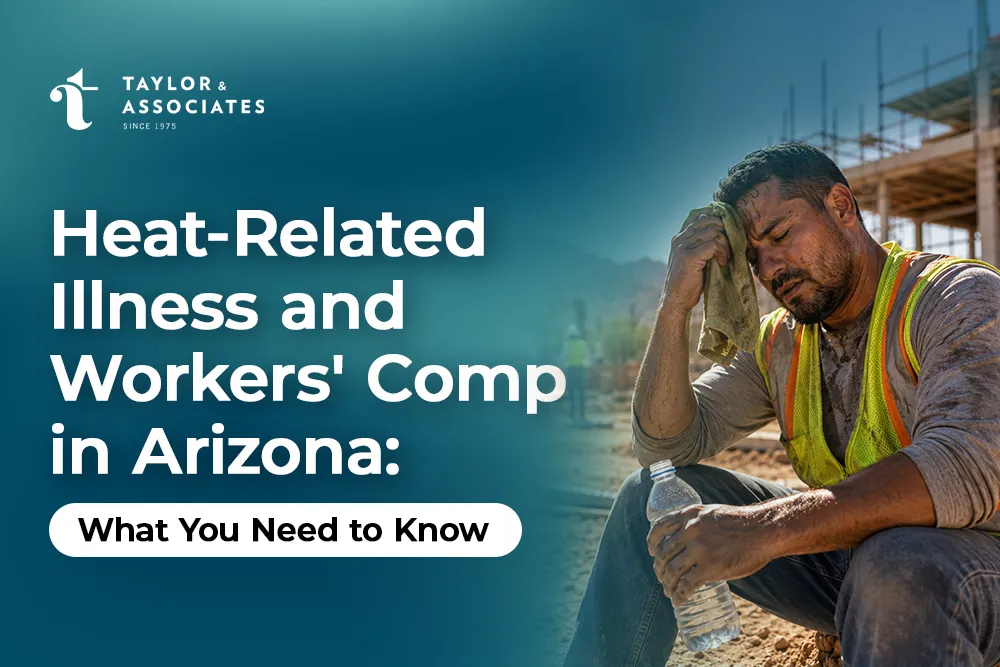
Quick answer: Yes — heat exhaustion, heat stroke, and other heat-related illnesses can be covered by Arizona workers’ compensation when they happen because of your job. Arizona law treats these as occupational illnesses, not just accidents, which means outdoor and non-air-conditioned workers have real protection when the heat becomes dangerous.
Phoenix summers aren’t just uncomfortable — they’re a genuine occupational hazard. Construction crews, landscapers, agricultural workers, delivery drivers, and warehouse employees without adequate climate control face real risk every year, and the state has taken notice. Phoenix has its own heat-safety ordinance for city contractors, and Arizona’s Division of Occupational Safety and Health (ADOSH) actively tracks and investigates heat-related workplace claims. If heat made you sick on the job, you have options — but knowing how the claim process treats these cases matters.
Is Heat Illness Actually Covered by Workers’ Comp?
Many people assume workers’ comp only applies to sudden accidents — a fall, a machinery injury, a cut. Arizona law is broader than that. It also covers occupational illnesses, meaning conditions that arise out of the course of your employment, even if there wasn’t a single dramatic incident.
To have a valid claim, you generally need to show that your work environment was a substantial contributing cause of your illness. A construction worker who collapses from heat stroke after hours in direct sun has a fairly clear connection between the job and the injury. A warehouse worker who suffers heat exhaustion in a poorly ventilated facility has a similar case. The key is documenting that the exposure happened because of your job duties and environment, not from something unrelated to work.
The Three Stages of Heat-Related Illness
Understanding the progression matters, both for your safety and for how the illness gets documented.
- Heat cramps — Painful muscle spasms, often in the legs or abdomen, caused by fluid and electrolyte loss during physical activity in the heat.
- Heat exhaustion — Heavy sweating, dizziness, nausea, weakness, and headache. This is the body’s warning sign that it’s losing the fight against the heat.
- Heat stroke — The most severe and dangerous stage. Symptoms include confusion, fainting, seizures, and a dangerously high body temperature. Heat stroke is a medical emergency — call 911 immediately if you or a coworker shows these signs.
Who’s at Highest Risk in Arizona
Certain jobs carry significantly more heat exposure risk than others:
- Construction and roofing
- Landscaping and groundskeeping
- Agriculture and farm labor
- Delivery and route driving
- Warehouse work without climate control
- Utility and infrastructure crews
If your job regularly puts you outdoors or in unventilated spaces during Arizona’s hottest months, you’re in a higher-risk category — and that’s exactly the population Phoenix’s local heat-safety ordinance and ADOSH’s monitoring programs were built to protect.
What to Do If You Experience Heat Illness at Work
- Get out of the heat immediately. Move to shade or an air-conditioned space and cool down with water.
- Seek medical attention, even if symptoms seem to improve. Heat exhaustion can progress quickly, and a medical record creates important documentation for your claim.
- Report it to your employer as soon as you’re able, in writing if possible. Arizona law requires prompt reporting to protect your eligibility for benefits.
- Write down what happened — the conditions, how long you were exposed, what breaks or water access you had, and how you felt.
- Keep a copy of everything — medical records, incident reports, and any communication with your employer or the insurance carrier.
Why These Claims Can Be Harder to Prove
Heat-related claims sometimes face more pushback than a straightforward physical injury. Insurance carriers may argue that a pre-existing condition, medication, hydration habits, or activities outside of work contributed to the illness. This is exactly why documentation matters so much — a clear record connecting your symptoms to your work conditions on that specific day makes a real difference in how a claim gets evaluated.
Frequently Asked Questions
Does it matter if I have a pre-existing condition, like diabetes or heart issues? Not automatically. Having a condition that makes you more vulnerable to heat doesn’t disqualify you from benefits — but it may lead the insurance carrier to question the claim more closely, which makes documentation even more important.
What if I felt fine at work but got sick later that night? Heat exhaustion symptoms can appear or worsen hours after exposure. Report the incident and seek care as soon as symptoms appear, and note the connection to your work shift that day.
Can I file a claim if I work indoors but the facility isn’t air-conditioned? Yes. Heat-related occupational illness isn’t limited to outdoor work — poorly ventilated warehouses, kitchens, and industrial spaces can also create compensable heat exposure.
What benefits could I receive? Depending on the severity, this can include medical treatment, a portion of lost wages while you recover, and disability benefits if the illness causes lasting impairment.
Stay Safe, and Know Your Rights
Arizona’s heat isn’t going away, and neither are the risks it creates for outdoor and non-climate-controlled workers. If you’ve experienced a heat-related illness on the job, don’t assume it’s just “part of the job” — Arizona law may entitle you to real benefits.
Contact us to talk through what happened, or learn more about our Workers’ Compensation services.
This blog post is for informational purposes only and does not constitute legal advice. Reading this content or contacting Taylor & Associates does not create an attorney-client relationship. Every case is different — consult with an attorney about your specific situation.